Opinions expressed by Entrepreneur contributors are their own.
Key Takeaways
- Don’t lead with labels. Lead with what customers love.
- A welcoming brand can attract people beyond your niche.
- Authentic and “cringe” content often outperforms polished marketing.
Most vegan restaurants market to vegans. Tacotarian does the opposite.
The Las Vegas-based restaurant brand serves plant-based Mexican food, but co-founder Kristen Corral says the company never wanted the experience to feel exclusive or overly niche.
“We don’t like to advertise that we’re vegan,” Corral says. “The story becomes, ‘Hey, we have this really good food. Oh, by the way, it just happens to be vegan.’”
This type of thinking shaped the brand early. Many vegan restaurants, Corral believes, unintentionally market themselves to a very small audience. Some become so focused on vegan identity that customers outside that world stop feeling comfortable walking in.
For Corral, the goal is to reach people outside the “3%” who would never walk into a vegan restaurant in the first place.
“They’re only marketing to the 3% of people that identify as vegan or vegetarian,” Corral said. “Then it’s like preaching to the choir.”
Tacotarian is warm and inviting — bright dining rooms, lots of windows, margaritas, beer, Coca-Cola, and familiar Mexican dishes made their own way. The welcoming approach helped Tacotarian grow from a single Las Vegas restaurant into a six-location brand with restaurants in Las Vegas and San Diego.
Corral said storytelling became important almost immediately because nobody knew who the founders were when they opened their first location in 2018.
“Without telling the story of our brand and getting the word out there, how would anyone find us?” Corral said.
That storytelling extends beyond the restaurant itself. Tacotarian posts founder content, behind-the-scenes videos, and social media clips designed to make the brand feel approachable instead of intimidating. The goal is not just reaching vegans — it is reaching people who would never normally walk into a vegan restaurant in the first place.
Why Cringe Is a Good Thing
Most restaurant owners know they need to create content for their business, yet some still don’t want to be on camera.
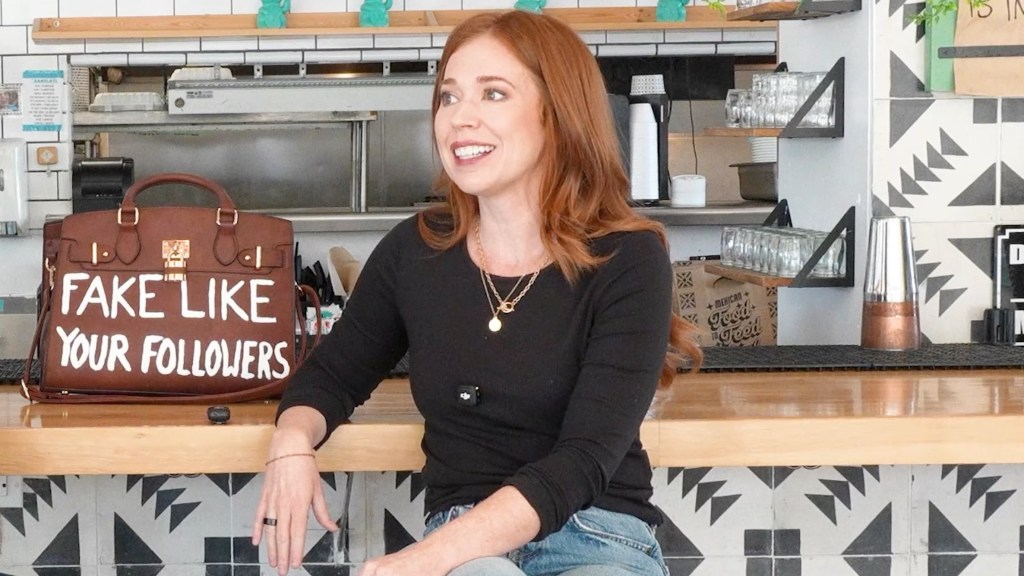
Corral understands that feeling. Even after building all six locations, speaking at TEDx, and growing a large social media audience, she says posting videos can still feel uncomfortable.
“It’s so cringey,” Corral says. “Even today I make a video, and I’m like, ‘This is the cringiest video I’ve ever made.’ But it works.”
Corral said videos featuring the founders consistently outperform polished graphics or static restaurant posts, especially on Meta platforms. In some cases, a screenshot will outperform a video entirely. After testing multiple video campaigns, Corral tried using a simple screenshot pulled from one of the videos as a static ad — it immediately performed better than the previous creative.
Corral said customers respond more to personality than perfection. Sometimes that personality has nothing to do with restaurants at all. One video featuring her dog generated more than 1.5 million views.
Many restaurant owners, Corral believes, overthink content because they are afraid of looking awkward online. Customers are usually looking for signs that a brand feels real and approachable.
Tacotarian builds community through polls, founder videos, replies to customer messages, loyalty programs, and email engagement — all designed to make customers feel connected to the brand beyond the restaurant itself.
“Showing our faces,” Corral says. “That’s what works really well for us.”